
Hair accessories are functional or ornamental objects wrapped, tied, twisted, inserted, or otherwise attached to the hair. Throughout history, types of ornamentation and the materials from which they were made indicated religious significance, social class, age group, and level of fashion awareness.
Infinitely varied in shapes, sizes, and materials, examples of hair accessories include: hair rings or bands, ribbons and bows, hairpins, hair combs, barrettes, beads, thread or string, hair spikes and sticks, and other affixed miscellaneous objects shells, jewels, coins, flowers, feathers perceived to have aesthetic or social and cultural value.
Hair accessories have been worn by people of all ages and by both genders. Hair rings and hair bands are cylindrically shaped hair accessories wound around the hair, designed to hold hair away from the face, or otherwise confine strands of hair.
These objects were solid gold or gold-plated clay, bronze, or lead.
19.02.2020 – As early as b. This style will give you plenty of room to express yourself through texture and contrasting color without having to sacrifice too much length in the process. Hispanic Costume — United States.
Ancient Egyptians wore similar rings during the New Kingdom Dynasties 18— Examples have been found in Egyptian tombs. Worn in wigs rather than hair, these hair rings were made of alabaster, white glazed pottery, or jasper, and were a sign of social ranking or authority Antiquity In North Americahair binders were made of pliable materials such as silk or cotton covering lead wire Cox In the twentieth century, the use of rubber and other manufactured elastomeric fibers made hair rings now called hair bands or ponytail holders more flexible.
They were covered with thread or fibers to make them less likely to break strands of hair. These fabric-covered elastic decorative bands were used to create ponytails in the hair of young girls and women Tortora and Eubank Ribbons and bows are narrow fabric strips of closely woven yarns or braid wrapped and knotted around the hair, also used to bind the hair.
Near hair accessories for women combs for women sleeved xxl
They were especially popular during the seventeenth and eighteenth centuries in Europe. In the s in France, ribbons were worn by women of all ages, from young girls to elderly dowager duchesses, and were specifically chosen to color coordinate with their dresses Trasko Fashionable men also adorned their long tresses with ribbons and bows.
A “love lock” was a lock of a man’s hair grown longer than the rest, and then accentuated with a ribbon Tortora and Eubank During the s in France and England, both a man’s queue a lock or pigtail on a wig and women’s elaborate coiffures were decorated with ribbons and bows.
In Mexico in the early s, women in Venustiano Carranza and San Pablito inter-twine their hair with brilliantly colored rayon ribbons, woolen cords with pom-poms and beading, and hand-woven tapes Sayer Hairpins are single-pointed pins used to dress or fasten the hair.
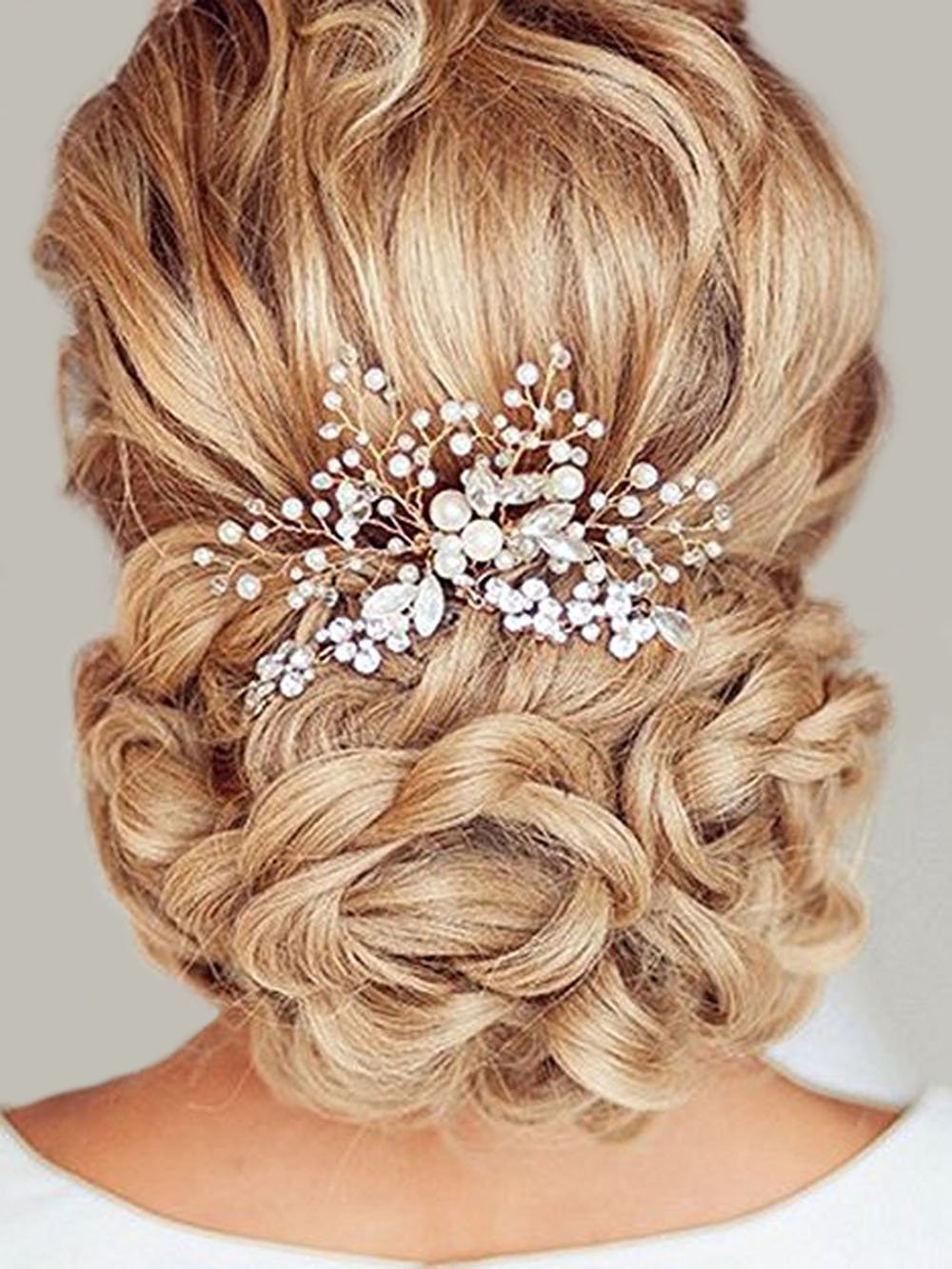
They serve both a functional and decorative purpose, as in central Africa where copper, wood, ivory, and bone hairpins are used to fasten the hair Sagay The elaborate hairstyles worn by ancient Roman women were often set with long hairpins hollow enough to double as containers for perfume or even poison.
In Japan, during the seventeenth century, hair ornaments of lacquered wood or tortoiseshell began to be used. The kanzashi a hairpin with a decorative knob, tassel, or bead on the end was worn by fashionable courtesans.

In fact, a conspicuous mark of a courtesan during this time was her “dazzling array of hair ornaments, radiating like a halo from an often dramatically sculptured coiffure” GoodwinIntroduction.
Other Japanese women wore hairstyles decorated much more simply, perhaps with a floral or pendant hairpin Goodwin Hairpins were also necessary for maintaining a fastidious appearance in France during the late s.
The large “periwigs” worn by men required them to shave their head or pin their hair tightly to the head. The use of bobbing pins included both large, straight pins and U-shaped hairpins.
The “bobbed” hair then allowed the wig to be donned more easily, as well as confined the underlying hair to present a neat, well-groomed appearance Trasko Hairpins continued in popularity as a means of fastening long hair into chignons.
According to Traskoit was considered indecent for Victorian women to be seen with an abundance of loose, streaming hair. She states, “Hairstyles continued to be as constrained as women’s lives” p.
In the early twentieth century, hairpins were also necessary for creating waves in the hair marcel waves during the s and pin curls in the s.
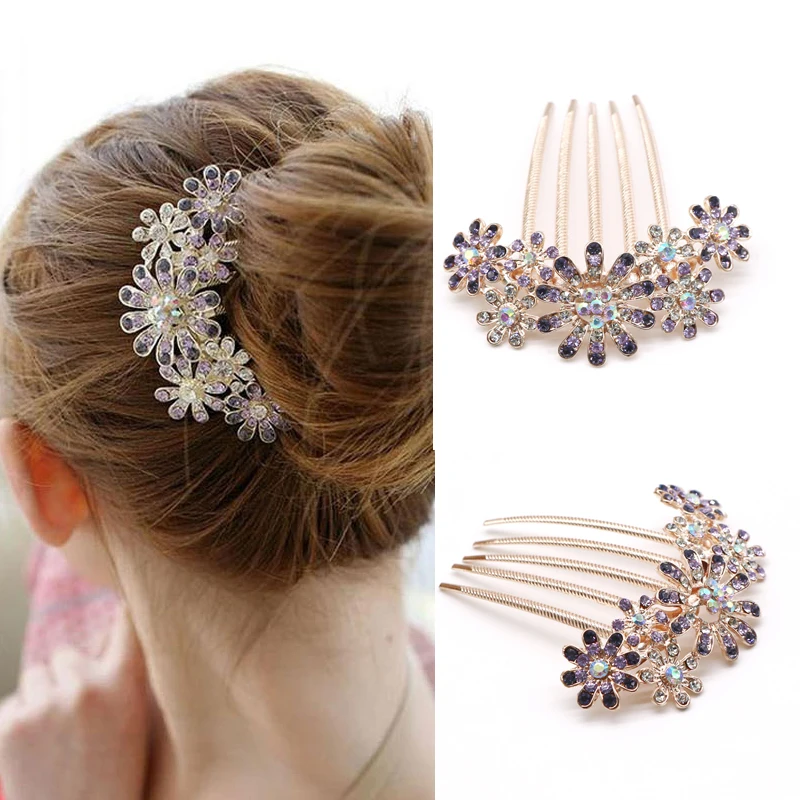
During the s the bobby pin, with its tight spring clip, replaced the older style open hairpins allowing women to bob their hair more effectively under tight-fitting cloche hats Tortora and Eubank Barrettes are metal pins approximately three inches long with a beaded head and guard cap, used to secure the hair.
Some of the first barrettes were used during the mid-nineteenth century.
It just depends on how they are being worn. Hair accessories for women combs for women It adds an element of rebelliousness and non-traditionalism to any hairstyle.
This bar-shaped hair accessory typically has a decorative face with an underlying spring clip to fasten to the hair Cox Often made of metal or plastic in a variety of colors, this hair clip could be viewed as a modified version of the bobby pin, combining the pin’s functionality with a more decorative outer appearance.
And the appeal is not solely Western.

In Mexico, Totonac and Tzelta girls who live near Papantla and Ocosingo, wear a colorful array of plastic slides and ornamental hair combs Sayer Headbands are hair accessories that also go back to ancient times, and combine aesthetics and functionality.
As early as b.
Women’s Hair Accessories | Hair Clips & Bands | Accessorize
These circlets were placed on the crown of the head. In the Middle Agesroyal European ladies wore fillets of metal in the shape of a crown or cornet with various types of veils.
Metal fillets gradually lost favor and were replaced by strips or bands of fabric Tortura and Eubank During the neoclassical revival of the early s, women imitated ancient Greek hairstyles by holding back their hair with fabric bands.
As hats and bonnets became more fashionable in the mid-to-late s, headbands lost popularity Trasko It was not until the s that headbands reappeared, when women began wearing headache bands for evening events.
Shops hair accessories for women combs for women petite
These bands were often ornamented with jewels or had tall feathers attached to them. Contemporary headbands often have a plastic U-shaped core covered in foam or fabric.
These head-bands fit closely over the top of the head and behind the ears.

They emerged onto the fashion scene once again in the late s and early s, when the First Lady Hillary Clinton began wearing them during and after her husband’s election in Tortora and Eubank Men as well as women wore headbands.
During the Jin Dynasty — c.

In Mexico during the sixteenth century, priests on the Yucatan Peninsula wore bark cloth headbands. The practice continues in present-day ceremonies.
Red bark cloth headbands, known as “god-hats,” are wrapped around the heads of worshipers Sayer For everyday purposes, hair adornments are rare among male Mexicans, who have followed the Western lead for “civilized” haircuts Sayerp.
However, there are exceptions. Older men from Amatenango occasionally wear factory-made bandanna handkerchiefs known as paliacates to tie back their hair from their faces.
The Huichol wear a headband of purchased cotton cloth called a coyera to fasten their hair-style in place. The narrow folded headband is wrapped about the head with the ends trailing and is often wound with ribbons or decorated with safety pins Sayer Hair combs have been used since the Stone Age to confine and decorate the hair.
This is a great mix between an asymmetrical cut and a bob. Hair accessories for women combs for women In particular, e-mail sent to or from a Site may not be secure, and you should therefore take special care in deciding what information you send to us via e-mail.
Boxwood combs, dating back to 10, b. Ancient Roman women set their hair with tortoiseshell combs. In China during the Tang Dynasty c.
Maxx hair accessories for women combs for women box
During the Song Dynasty — c. Around the twelfth year of the Republic, Chinese women began wearing an extremely elaborate hair accessory called a “coronet comb.
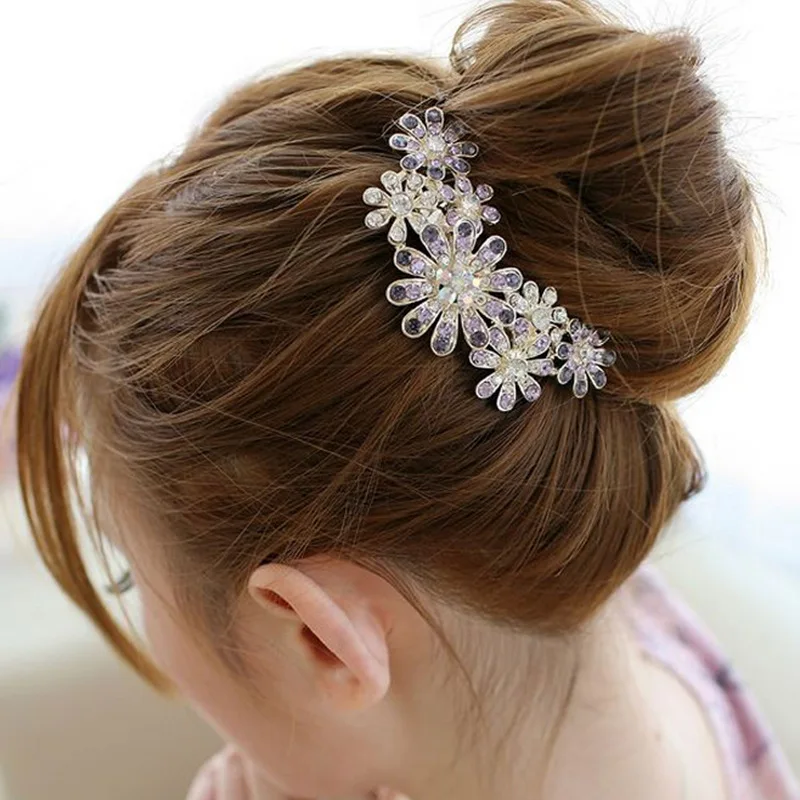
A long comb, nearly one foot long and made of white horn, was placed on top. The arrangement required the wearer to turn her head sideways if passing through a door or entering a carriage Xun and Chunming During the seventeenth century in Japan, tortoiseshell or lacquered wood combs embellished with gold or mother-of-pearl were worn by fashionable courtesans, who often combined them with kanzashi decorative hairpins.
During the nineteenth century, women often used hair combs decorated with gemstones or “paste” imitation jewels. The twentieth century saw the continued use of hair combs for long hair, made of a variety of new manufactured materials such as celluloid and plastics.
36 Wedding Hair Accessories You’ll Love (and Can Buy Now)
Hair combs also were used to attach small hats and veils to the head during the s. The s created new forms of hair combs, including a circular-shaped hair comb that acts like a headband and the large double-sided comb called a “banana clip” that fastened women’s hair into a ponytail.
Beads used as a decorative means of accentuating plaited hair have long been worn by cultures in Africa. Cornrowing is a traditional West African method of arranging the hair into numerous small braids.
Forever 21’s failure to insist upon or enforce strict performance of any provision of this Returns and Exchanges Policy will not be construed as a waiver of any provision or right. swarovski crystal rings how to video games To redeem online at Forever
It can take from two to six hours to arrange, depending on the complexity of the style. Beads were also used to accentuate the plaited strands Sagay Used for hundreds of years in Africa, during the s this African-inspired hairstyle penetrated the Western mass market when the movie actress Bo Derek wore her hair in cornrow braids in the movie 10 Eubank and Tortora Decorating cornrow braids with beads is still an important part of West African hair traditions in the early s.
Thread may also be used to wrap hair and is a more recent method of braiding used by men and women in the tropical areas of West Africa. The thread-wrapped hair causes the strands to raise from the head like spikes, creating a decorative hairstyle as well as keeping the head cool Sagay The “trees” hairstyle is one style popular in West and Central Africa.
The hair is parted into five sections, secured with rubber bands, and braided into cornrows. Each center section is wrapped with thread, covering three-quarters of the entire hair’s length.
Different colored threads are sometimes used for an even more decorative effect Thoman String has a similar decorative, fastening history.

During the Ming Dynasty approximately c. Thread or yarns that are assembled into an open, gauzelike fabric creates a netting. Netting was used during the ancient Roman Empire and again during medieval times in Western Europe as a means to bind hair.

In the middle of the nineteenth century, nets called snoods were a fashionable way for women to confine long hair at the base of the neck.
They were revived once again during the s. Older Chinese women also used netting during the Song Dynasty c. A black hair net covered their buns, and then jade ornaments were pinned in a random arrangement onto the net.
It became known as xiao yao jin or “random kerchief” Xun and Chunmingp.
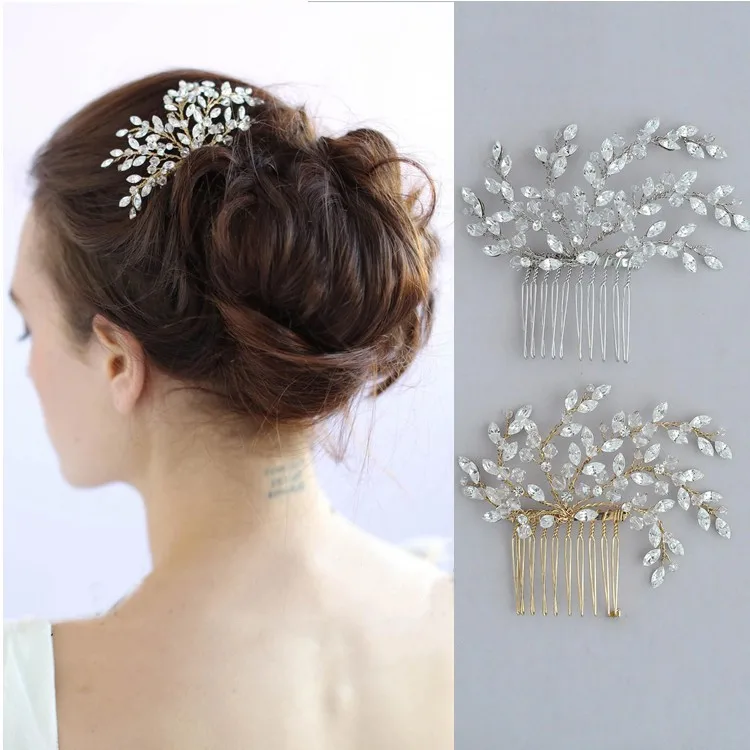
Hair forks, hair spikes, and hair sticks have been used in diverse cultures, from Native Americans to Far Eastern nations such as China and Japan.
 swarovski crystal rings how to video games